A burner for wax melts, and how to choose between tealight and electric
A burner for wax melts is a holder with a shallow dish on top and a tealight, bulb or hotplate underneath. The warm dish melts a block of scented wax and the fragrance leaves the pool. Which to choose turns on the flame, the room and how gently it warms the wax.
By the editors of Aromatherapy Oil DiffuserUpdated 1 November 20265 min read
In short
- A tealight burner is cheap and needs no socket; an electric burner has a switch and no flame.
- The dish must hold one melt fully liquid; the gap between flame and dish sets how hot the wax runs.
- For a hallway you leave or a home with a cat, a flame-free diffuser with a timer is the calmer tool.
Tealight or electric, what each one does
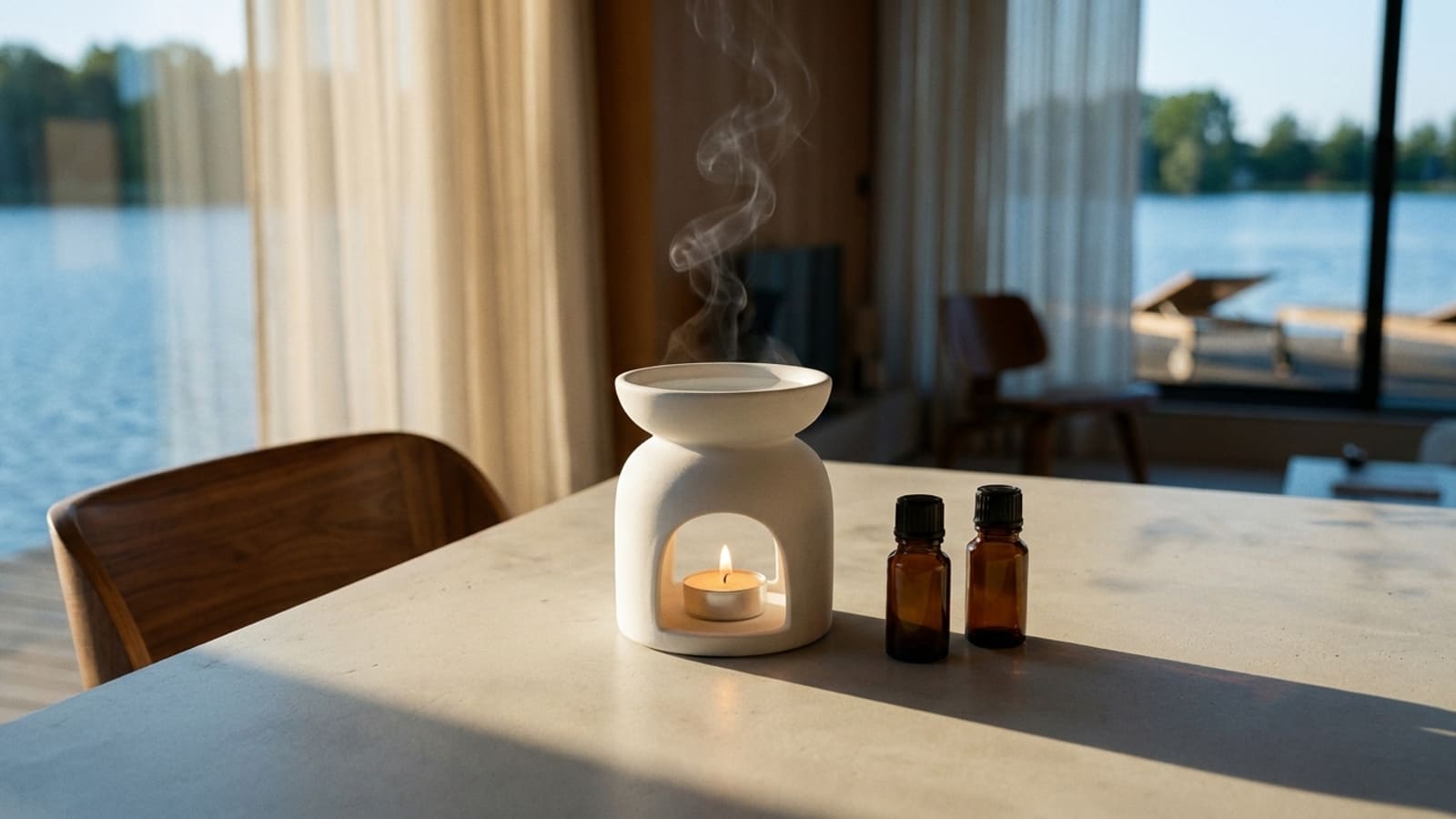
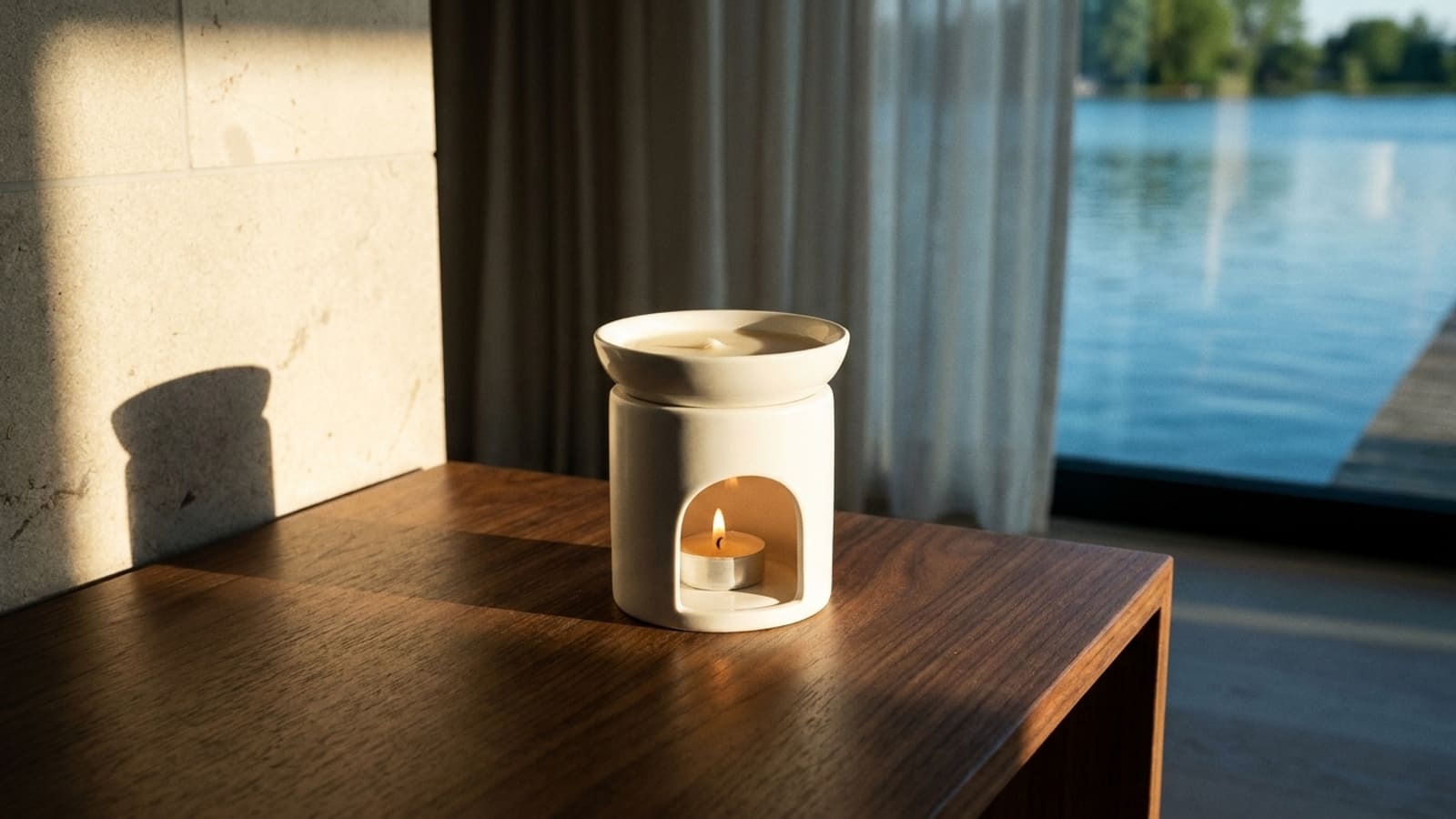
A tealight burner is one piece of ceramic, glass or stone: a dish moulded into the top, an arched opening below for a small candle. The flame heats the dish directly and the only control is lighting it or blowing it out. No socket, little cost, a naked flame under hot wax.
An electric burner comes in two forms: a bulb burner, with a small lamp inside the body and a lift-off dish on top, and a hotplate burner, with a warming element in the base under a fixed or loose dish. Both have a switch, some a dimmer, neither a flame.
| Tealight burner | Bulb burner | Hotplate burner | |
|---|---|---|---|
| Heat | A candle below the dish | A lamp inside the body | An element in the base |
| Control | None | Switch, sometimes a dimmer | Switch, sometimes a dimmer |
| Open flame | Yes | No | No |
A burner is only one way to scent a room; our rundown of the electric diffusers that need no dish and no flame shows what a bottle of oil in a machine does instead.
Dish size and depth
The dish should take one melt lying flat and hold it fully liquid with space below the rim. Too small and wax runs down the body towards the tealight, a fire risk. Wide and shallow tends to give a thin pool, quick scent and a quick finish; deeper and smaller a slower start and a longer run.
How high the flame sits under the dish
In a tealight burner, the gap between the flame tip and the underside of the dish sets how hot the wax gets. A tall chamber keeps the flame well below and lets air past, so the wax warms gently. A short chamber puts the flame close and overheats the wax, which smells scorched and leaves a dark film. Use the tealight size the burner was made for; a taller or longer-burning candle lifts the flame nearer and leaves less room for air.
Ceramic, glass, soapstone or metal
- Ceramic holds heat evenly but chips at the rim and cracks if cold water meets a hot dish.
- Glass shows the glow and the wax level, and every smear.
- Soapstone is heavy and stable, slow to warm and slow to cool.
- Metal warms fast and usually carries a ceramic or glass dish; check it sits firmly.
Where to stand it
Stand it on a flat, level surface that does not mind heat, a tile or a saucer. No shelf, curtain or lampshade above, out of the swing of a door and beyond the reach of small hands and tails. A draught makes a tealight flame lean, soots the chamber and leaves one side of the dish cooler.
An electric burner adds the lead: it should reach the socket without crossing a walkway, away from a splashy worktop or a steamy bathroom unless the maker says otherwise. For a hallway you want scented while you are out, the page where we set each flame-free machine against the room it covers is the better start, because a timer switches a diffuser off and no wax is left warming.
Cleaning the dish without cracking it
Let the wax set hard, then ease it out from the edge; a lift-off dish can be turned over and tapped, a fixed dish warmed briefly and wiped with kitchen roll. Never run cold water into a hot dish and never scrape with a knife, which scores the glaze. A scorched ring usually comes off with a soft cloth and washing-up liquid once cool. Unplug an electric burner first and keep base, lead and bulb away from water.
When a flame-free diffuser suits the home better
A burner belongs in a room with someone awake in it, which rules out a child's bedroom, a landing, the hall during the working day and anyone's bedside. An electric burner removes the flame but not the hot dish, so the same applies in a home with a cat.
For those rooms an electric diffuser scents without heat or wax: a bottle of oil you choose and a timer that switches it off. Our comparison of what a bottle of oil costs to run in each kind of diffuser sets out which machine suits which room.
Rather skip the hot dish?
Our homepage sets the flame-free diffusers side by side: which takes a bottle of oil, how far each reaches and what a month costs.