Essential oils for an oil burner, and how to get the dish right
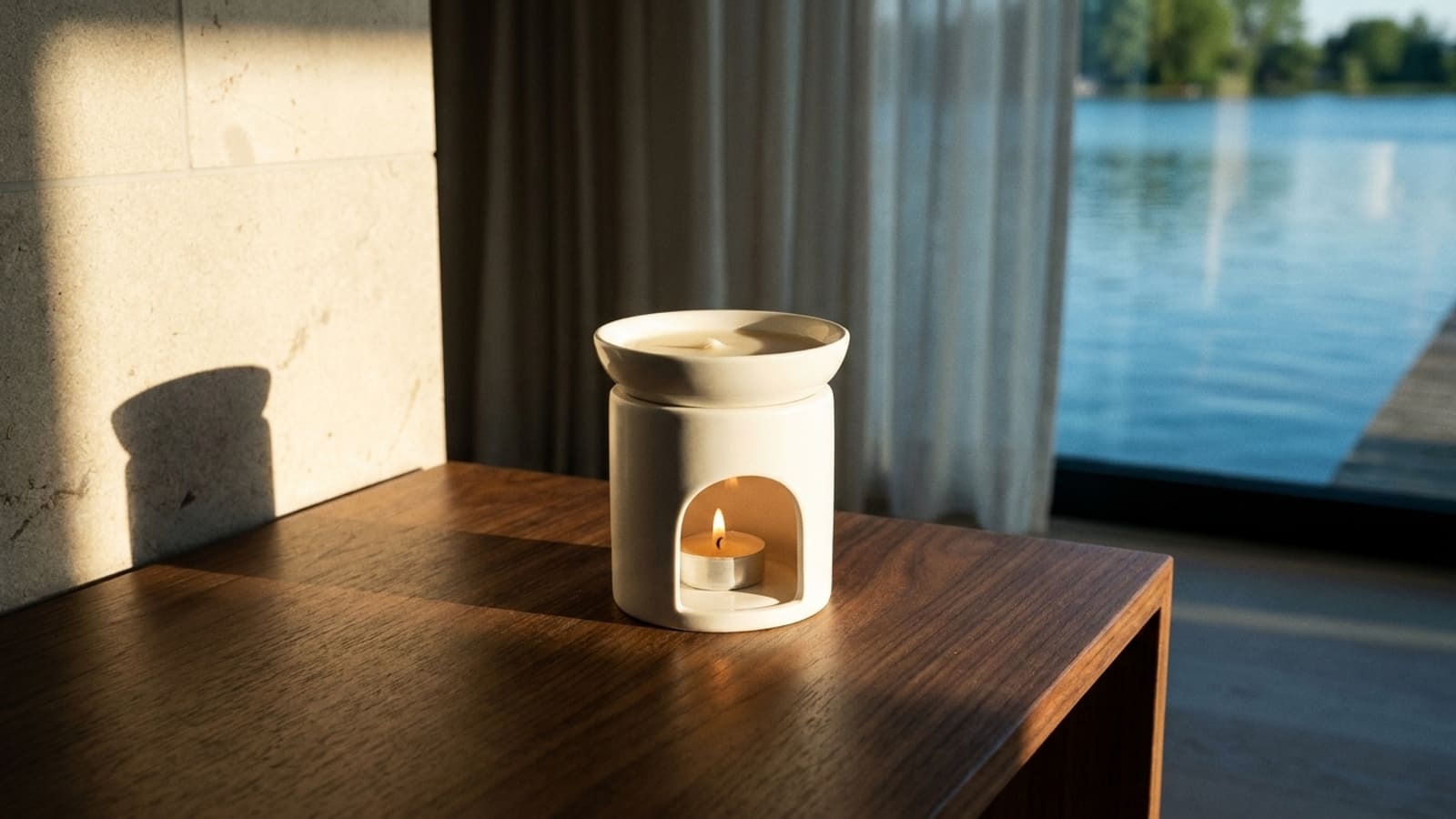
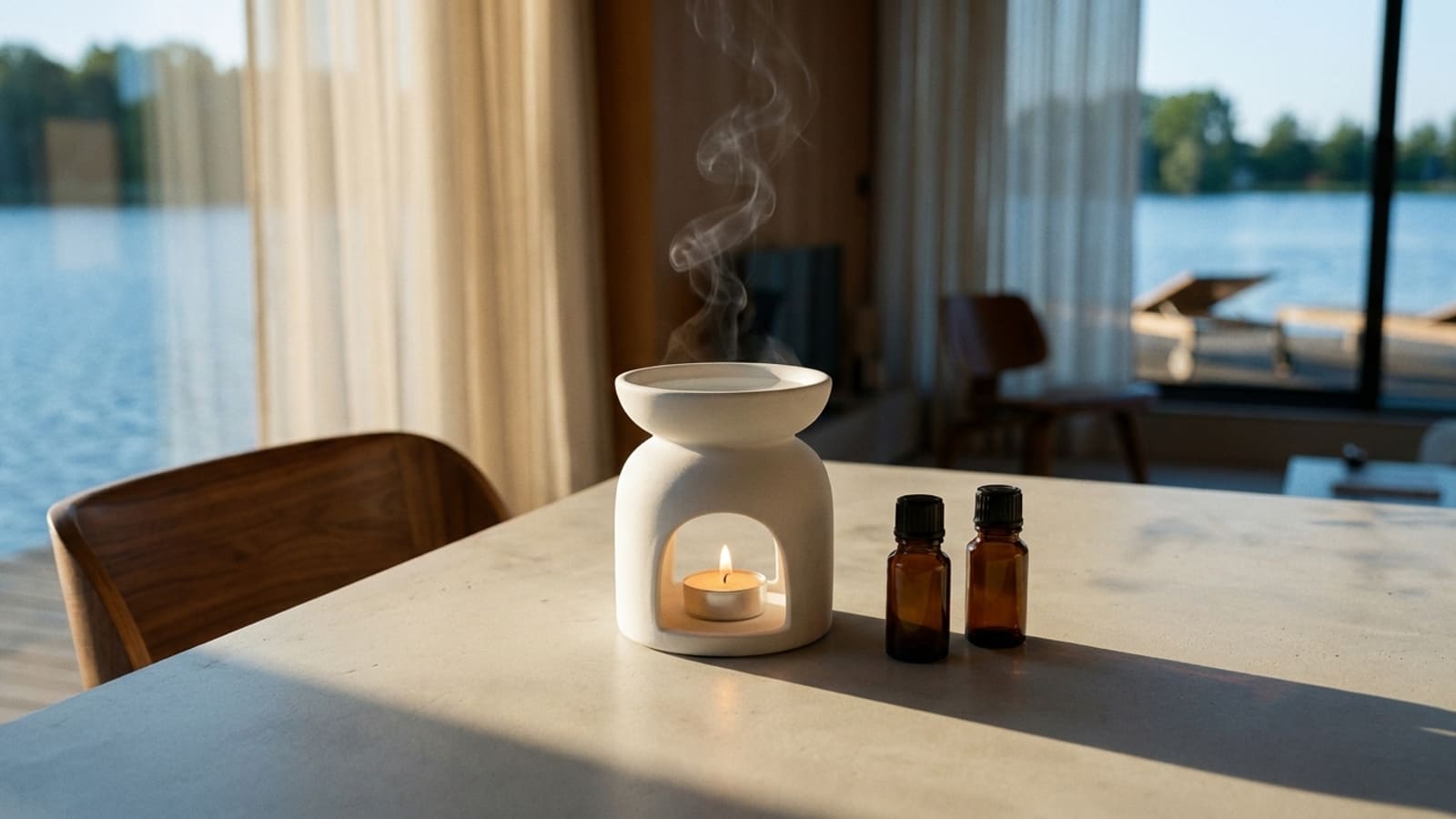
Most thin essential oils suit a tealight oil burner: lemon, sweet orange, lavender, rosemary, pine and cedarwood among them. Water goes in the dish first, a few drops of oil float on top, and the tealight below warms the water so the scent rises with the steam. Thick resins and strong spice oils are usually left out.
By the editors of Aromatherapy Oil DiffuserUpdated 18 October 20265 min read
In short
- Thin oils such as citrus, lavender, rosemary and the lighter woods behave well on the warm water of a burner dish.
- Water first, then a few drops; snuff the flame before the dish runs dry, or the oil scorches and the ceramic can crack.
- A naked flame is the wrong tool in a child's room, around pets or in a room you leave; a flameless diffuser does the same job without one.
Which essential oils suit the dish
Thin, mobile oils give the best result, because they lift readily off warm water and leave little behind. The heavier an oil, the more it clings to the dish and the more its character shifts when warmed.
| Oil | On the warm water | Worth knowing |
|---|---|---|
| Lemon, sweet orange, bergamot | Bright and quick to fill a room | First to fade; add a drop later |
| Lavender, geranium | Soft and floral | Lavender sits beside almost anything; geranium is easily too much |
| Rosemary, peppermint, eucalyptus | Green, sharp, camphor-like | Forceful; start with less than you think |
| Pine, cedarwood, cypress | Dry, resinous, lasting | Holds up a citrus well and outlasts it |
Blending is simple in a burner: the drops sit together on the water and warm as one, and a citrus over a wood or lavender with a little rosemary are the usual pairings. To skip the flame and still choose your own bottle, our comparison of the flame-free machines that take a loose essential oil sets out what each kind does with it.
Water first, then the drops
- Stand the burner on a flat, heat-proof surface with nothing above it and no curtain or draught nearby.
- Fill the dish most of the way with water, leaving a little room at the rim so it does not slop when nudged.
- Add a few drops of oil to the water, often three to five for an ordinary room and fewer for a forceful oil.
- Light a tealight and slide it into the chamber beneath. The water warms within minutes and the scent begins.
- Snuff the flame before the water is gone, whenever you leave the room and when you go to bed.
A tealight burns for as long as its pack says and the water goes down the whole time, so glance at the dish now and then. Top up with warm water rather than cold; a hot dish does not like a sudden chill.
Why the dish must not run dry
The water is not padding; it carries the oil and keeps the dish temperature in check. Once it has gone, the film of oil sits directly on ceramic that is still being heated, stops evaporating cleanly and starts to scorch, with an acrid, burnt smell and a brown, varnish-like crust. A dish left bone dry over a flame can craze or split. Fill properly before lighting, snuff the candle when the water is low, and start again with a fresh fill rather than relighting over the dregs.
Oils most people keep out of a burner
- Thick resins and roots such as myrrh, benzoin and vetiver. They barely lift off warm water, cling to the dish and need scrubbing out.
- Strong spice oils such as cinnamon bark and clove. Warmth makes them sharp in a closed room; a single drop inside a blend is the usual approach.
- Anything already diluted in a carrier oil, such as a massage or bath blend. The carrier is a fat that does not evaporate and leaves a greasy dish.
Fragrance oils sold for burners are a different product with their own rules; this article stays with the dark glass bottle of a single plant. Our overview of the devices that run a scented oil without a flame covers where a composed fragrance goes instead.
Cleaning the dish
Once cool, pour away the last of the water and wipe the dish while the film is still soft. Washing-up liquid in warm water deals with most of the rest; a scorched ring wants a paste of bicarbonate of soda left to sit, then a soft brush. Clean between oils, not just between weeks, because leftover lavender under fresh lemon muddies both.
When a flame is the wrong tool
A tealight is a naked flame under a hot dish, and there are rooms where that is not sensible: a child's bedroom, a flat shared with a cat, a hallway you want scented while you are out, or anywhere you might drift off. A burner belongs only in a room with someone awake in it.
For those places a flameless diffuser does the same job, taking a bottle of oil with no heat source and often a timer that switches it off for you. The guide that pairs each kind of diffuser with the oil and the moment it suits shows what each reaches and what it costs to run.
Thinking past the tealight?
Our homepage sets the flame-free diffusers side by side: which takes a loose oil, how far each reaches and what a month of scent costs.