Vanilla essential oil, the oil that no still can make
Strictly speaking there is no vanilla essential oil. The cured pod of Vanilla planifolia, an orchid, will not give up its scent to steam, so what is sold under that name is a vanilla absolute or oleoresin, one diluted in a carrier, a vanillin fragrance oil, or a blend.
By the editors of Aromatherapy Oil DiffuserUpdated 28 October 20265 min read
In short
- Vanilla is not steam-distilled; a solvent pulls the scent out, giving an absolute, an oleoresin or a CO2 extract.
- Four things share the shelf: neat absolute, absolute in jojoba or coconut, vanillin fragrance oil, and blends.
- Neat absolute suits a burner, thinner forms suit reeds and cold-air machines, and a water tank wants a blend made for it.
Why the pod will not give up its oil to steam
An essential oil is what comes over when steam passes through plant material and the vapour is cooled. A vanilla pod will not do it: its scent sits in the cured bean as vanillin and heavier compounds that stay put while the steam goes through.
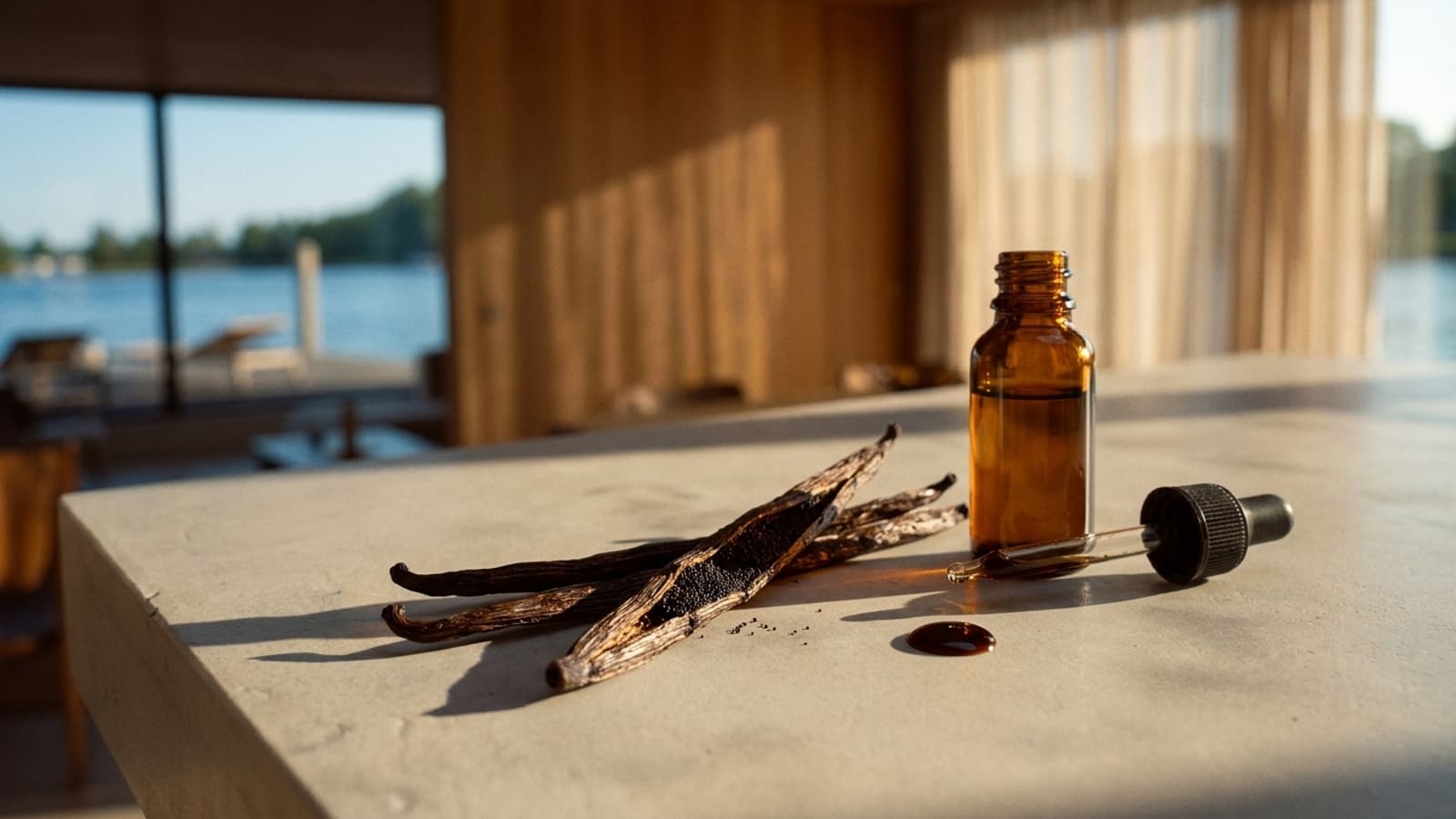
So the pod is washed instead, soaked in a solvent that is then driven off, leaving a dark, syrupy absolute, a cruder oleoresin, or a CO2 extract where pressurised gas does the washing. Those three are the only forms that come from the plant. The green pod has almost no scent; curing gives it the colour and the smell.
The four bottles on the shelf
Four bottles answer to the name; only the back labels tell them apart.
| What it is | On the back label | How it pours |
|---|---|---|
| Neat absolute or oleoresin | Vanilla planifolia, absolute, solvent extracted | Dark, thick, may need warming |
| Absolute in a carrier | Vanilla planifolia in jojoba or coconut, with a percentage | Thinner, fluid, slightly oily |
| Vanillin fragrance oil | Parfum, aroma oil, vanillin, for burners or reeds | Thin and clear |
| Blend | Vanilla with other oils, often in a carrier | Varies |
Each is honest if the label says so. The trouble starts when thin vanillin is sold at absolute prices, or when a thick absolute meets a machine that cannot move it. Our comparison of the machines that run a thick oil and the ones that will not starts from the bottle.
Pod or vanillin, how to tell by nose
Vanillin is a single molecule. It can be taken from the pod, but most of the world's supply is made in a factory from other raw materials, and on its own it smells sweet and flat, like icing sugar or a vanilla candle.
A true absolute carries vanillin with company: something smoky, something like dried fruit or rum, and a darker base that lingers. Put a drop of each on plain paper and come back later; the vanillin strip simply fades, the absolute strip keeps changing as it dries.
A thick oil meets five machines
Thickness decides everything here. Most diffusers expect a thin oil, and a neat absolute is closer to treacle.
- Ultrasonic water tank: neat absolute will not disperse and gums up the plate, and a jojoba dilution leaves a film on the water. Only a blend made for water diffusers belongs here.
- Nebuliser: the glass atomises a thin oil; a thick absolute clogs it. A light vanilla blend without carrier is the most it will take.
- Pod machine: takes its own pods and nothing poured in. Choose a vanilla pod from that maker's range.
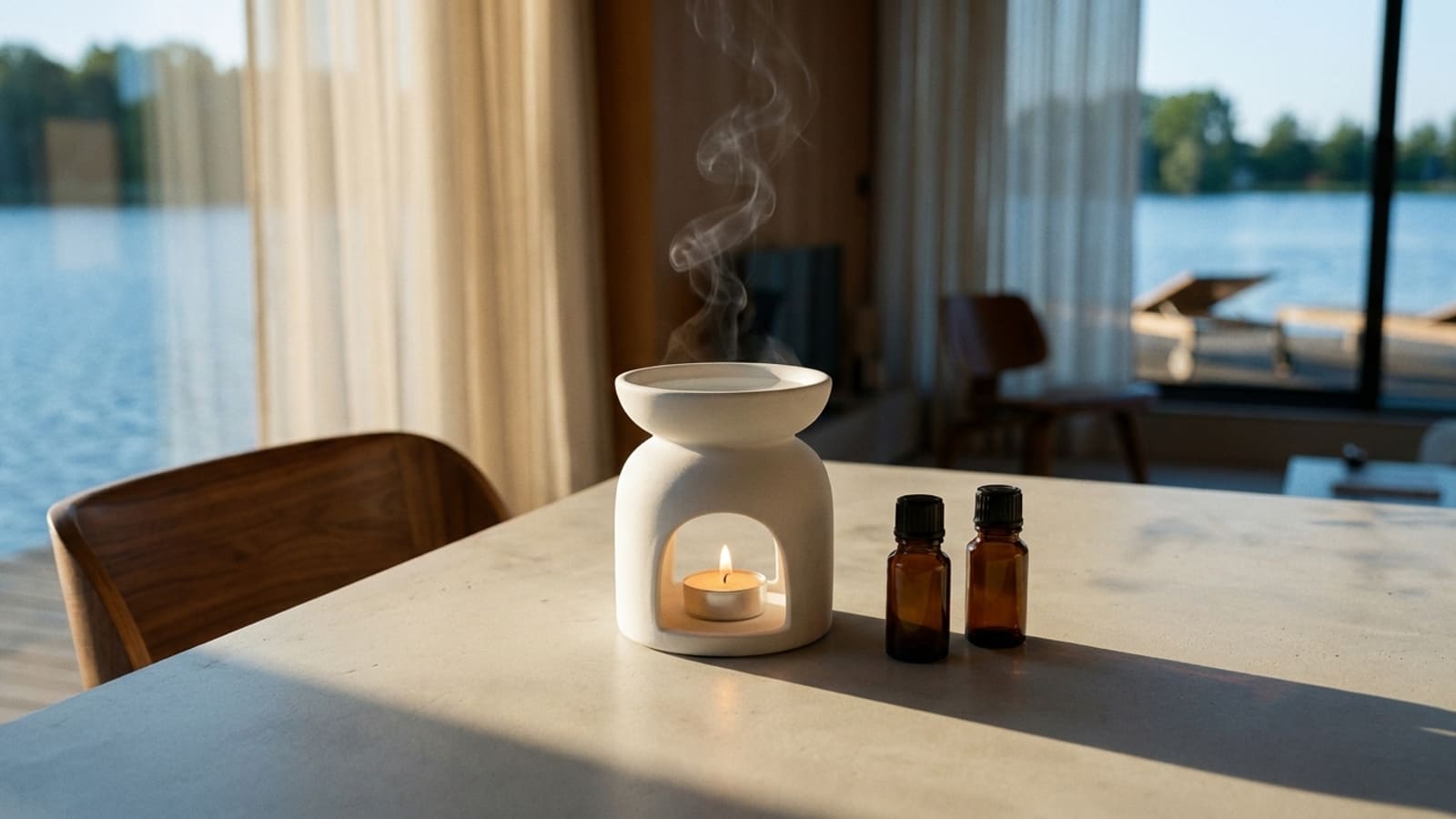
- Oil burner: heat thins the absolute, and anything from neat to fragrance oil will scent a room, with the usual care around a flame.
- Reed diffuser: an absolute alone is too heavy to climb the reeds. A fragrance oil, or an absolute thinned in a reed base, works.
A cold-air diffuser on loose oil takes a thin fragrance oil or a blend made for it; the neat absolute, no. If your machine is already on the shelf, the page where we set each diffuser against the oil it can actually move tells you which bottle to pick up.
A base note that wants lightening
Vanilla is a base note and on its own reads sweet and close, so most people pair it with something brighter or drier: sweet orange or bergamot to lighten it, sandalwood or cedarwood for a dry evening scent, lavender to keep the sweetness in check.
Dose it below lavender. Vanilla lingers, and a room that smells of it at the door is cloying by the end of the evening. One drop of absolute or a small splash of fragrance oil is the place to start.
Cold bottle, thick oil, and the words to look for
A neat absolute keeps in dark glass with a tight cap, in a cool cupboard. It thickens further when cold, so warm the bottle in your hands or in warm water before pouring; never heat it directly. A fragrance oil ages like any blend: the top notes go first and the vanillin stays. Anything sharp, sour or faintly like old paint goes in the bin.
Before buying, look for Vanilla planifolia and the word absolute, oleoresin or CO2 extract. A percentage next to jojoba or coconut means a dilution, and the price should say so. Parfum or vanillin in the ingredients means a fragrance oil, fine for a burner or reeds and a poor buy for a water tank. For what each form costs to keep running, our guide to what a bottle or a pod costs month by month sets them side by side.
Not sure which machine takes your vanilla?
Our comparison matches each diffuser to the oil it can run, with reach, noise and refill cost.