
Wardrobe air freshener, and why a small dry one is the right one
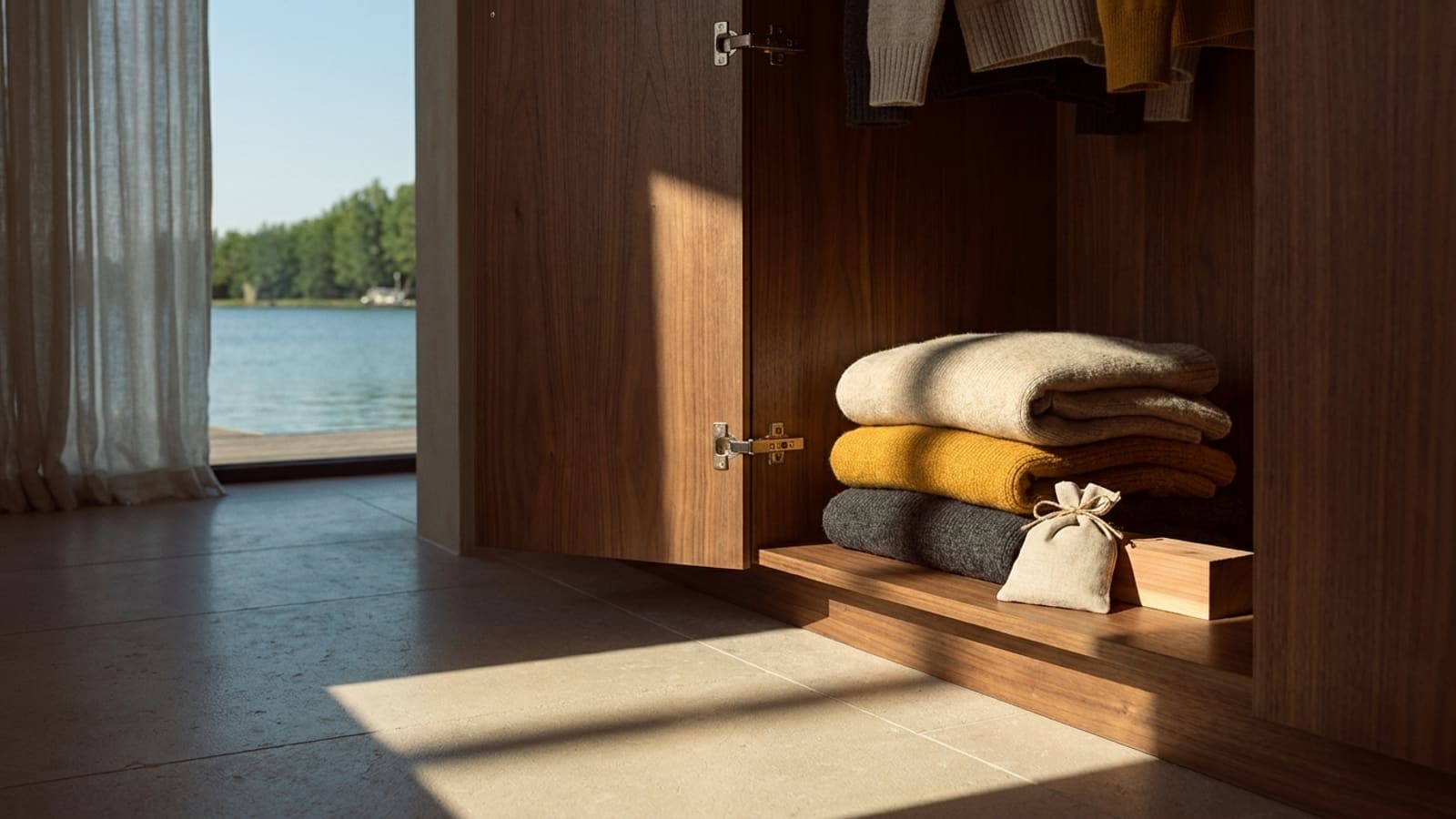
A wardrobe air freshener is a dry, slow scent source for a closed cupboard: a lavender sachet, a cedar block or a few drops of oil on a pad. The space is small and shut, so a little scent goes a long way, and anything wet or dripping is a risk to the clothes.
By the editors of Aromatherapy Oil DiffuserUpdated 14 October 20265 min read
In short
- Deal with the cause first: damp clothes, a cold outside wall, a musty back panel or shoes on the floor.
- Pick something dry, such as a lavender or cedar sachet, a cedar hanger or an oil pad kept off the fabric.
- Keep sprays, gels, candles and water diffusers out of a wardrobe; they stain, leak or add moisture.
Why the wardrobe smells in the first place
A closed wardrobe does not make its own smell; it keeps whatever it is given. Clothes put away before they were properly dry, a jumper worn once and folded back onto the pile, trainers on the floor underneath. The door shuts, the air stops moving, and the smell settles into the fibres.
The furniture itself can be the cause. A wardrobe against a cold outside wall collects condensation behind the back panel, and that thin board is the first thing to turn musty. Only once the inside is dry and clean is a scent worth adding.
- Hang washing until it is bone dry before it goes in; slightly damp is the usual culprit.
- Keep shoes in a box or on a rack, not loose on the wardrobe floor.
- Wipe the shelves and the back panel with a damp cloth and let them dry with the door open.
- Leave a hand's width between the wardrobe and an outside wall.
The forms that suit a closed cupboard
Inside a wardrobe the scent has nowhere to go, so the quiet, dry forms that would be lost in a living room are exactly right here. Use one at a time.
| Form | How it works | Where it goes |
|---|---|---|
| Scented sachet or hanging bag | Dried lavender or cedar shavings in a cloth pouch | Over the rail or on the shelf, not pressed against clothes |
| Cedar block or cedar hanger | The wood itself carries the scent | Among the hangers or on the shelf edge |
| Essential oil on a pad | A few drops on a cotton pad, a wooden block or a felt tag | In a small dish or clipped to the rail, away from fabric |
| Scented drawer liner | Paper that carries a scent, laid flat | Under folded clothes on a shelf or in a drawer |
| Open bowl of dried botanicals | Lavender heads or dried citrus peel | Top shelf, where nothing can knock it over |
Lavender and cedar are the two scents most people reach for in a wardrobe, and they sit well together. The oil pad is the most flexible choice, because it takes whatever bottle you already own. If you are still deciding which oils are worth buying, our comparison of oils and the machines that run them sets out what each scent suits and what a bottle works out at per fill.
What to keep out of a wardrobe
The things that work in an open room are the ones that cause trouble in a closed box.
- Sprays, and oil dropped straight onto clothes: both can mark fabric, and a wardrobe gives no room to spray without hitting something.
- Gel fresheners: the gel can soften and leak onto whatever is folded below.
- Plug-in fresheners: they need a socket and moving air; a wardrobe has neither.
- Ultrasonic diffusers: they put a mist of water into the air, the last thing a cupboard full of fabric needs.
- Candles and wax burners: never.
A diffuser belongs in the room, not in the cupboard. On the bedside table or the chest of drawers, the wardrobe picks up a little of it each time the door opens, with no moisture going in. For a room you sleep in, our rundown of how loud each machine is and what it costs to run is the place to start.
Placement, and when to refresh
Put it high and dry. The shelf above the rail, or the rail itself, is the spot, with the sachet or block not resting against anything you will wear. If something is going to shed or leak, it then lands on the shelf and not on a shirt.
Refresh when the scent fades, not by the calendar. Squeeze a sachet to release more, rub a cedar block lightly with fine sandpaper, and swap an oil pad for a clean one rather than topping it up; a pad that keeps taking oil ends up wet. Open the door now and then so stale air leaves.
From the wardrobe to the rest of the bedroom
Once the wardrobe is sorted, the bedroom around it is the next question. The same lavender can run in a diffuser on the chest of drawers in the evening, and cedarwood oil pairs with it well. Keep the output low; a bedroom, like a wardrobe, needs less than you expect.
Which machine depends on the oil you want to use and on how much noise you will put up with at night. We lay that out on the page that matches each bottle to a machine and a monthly cost.
Scenting the bedroom next?
Our homepage compares diffusers for essential and fragrance oils, with noise and running cost.