
Essential oils explained, from the plant to the dark glass bottle
Essential oils are the concentrated, strongly scented compounds a plant gives up when it is steam-distilled or, for citrus peel, cold-pressed. They are not oils in the kitchen sense: thin, quick to evaporate, carrying the smell of the leaf, flower, wood or peel they came from. A small bottle holds the scent of a great deal of plant, which is why it costs what it does.
By the editors of Aromatherapy Oil DiffuserUpdated 7 October 20265 min read
In short
- An essential oil is the scent a plant keeps in its glands, drawn out by steam or by pressing the peel, with nothing added.
- It is dear because a small bottle stands for a large harvest, and it is thin and quick to evaporate, not greasy.
- Read the Latin name, plant part and method on the label; store it in dark glass, capped and cool, off skin and away from children and pets.
Where the scent in the bottle comes from
Plants keep their scent in tiny glands in the leaf, petal, heartwood or peel; rub a sprig of rosemary and the smell on your fingers is the essential oil. For most plants it is collected with steam: the material goes into a still, steam passes through and carries the oil off as vapour, and once cooled the oil separates from the water. Citrus is the exception: the peel is pressed cold, much as you would press zest.
Why it is not oily, and why so little costs so much
The word oil misleads. Cooking and carrier oils are fats: greasy, and a drop on paper stays as a ring. An essential oil is a mix of volatile aromatic compounds light enough to lift into the air at room temperature; on paper it lifts off and leaves almost no mark.
The price follows from the plant. Only a small share of a plant's weight is oil, so a modest bottle stands for a large harvest: armfuls of lavender, sacks of peel, a great many rose petals. Rose, jasmine and neroli yield least and cost most; peel and leaf give more freely.
Essential, fragrance or carrier
Three things share the shelf and the word oil. An essential oil is one plant, nothing added. A fragrance oil is composed by a perfumer, often from factory-made aroma molecules in a base; it can smell of things no plant makes, and the label usually says parfum. A carrier oil is a plain fat such as sweet almond, used to dilute an essential oil before it goes near skin; it has almost no scent and does not belong in a diffuser.
The main scent families
The everyday ones, by family.
| Family | Everyday examples | How it tends to smell |
|---|---|---|
| Citrus | Lemon, sweet orange, bergamot | Bright; first to arrive, first to fade |
| Herbal | Rosemary, peppermint, tea tree | Green, like the crushed leaf |
| Floral | Lavender, geranium, rose | Soft and sweet, longer in the room |
| Woody | Cedarwood, sandalwood, pine | Dry and warm, sits under the rest |
| Resinous | Frankincense, myrrh, benzoin | Deep, faintly smoky, slow to leave |
| Spicy | Cinnamon, clove, ginger | Warm and sharp; a drop goes far |
Many people mix across families, a lively citrus or herb over a wood or resin that lingers; the comparison that pairs each scent with a time of day and a machine does that matching for you.
How they are used around the house
- On a cloth or cotton pad: a drop in a drawer, behind a radiator, in the glovebox; the cheapest way to find out whether you like an oil.
- In cleaning water: a little lemon, tea tree or pine in the mop bucket. You add the smell; the soap does the cleaning.
- In a diffuser: a water diffuser mists a few drops, a waterless machine runs the oil neat, a pod machine takes only its maker's cartridges; the leaflet decides amounts.
Our walkthrough of the diffuser types and what each one burns through sets out which machine takes a loose oil and what each costs to run.
Reading the label
Turn the bottle round and look for these.
- The botanical name in Latin, Lavandula angustifolia or Citrus limon, not just lavender or lemon.
- The words 100% pure essential oil. Nature identical, aroma oil or parfum point to a composed scent.
- Where it was grown, plus a batch or lot number.
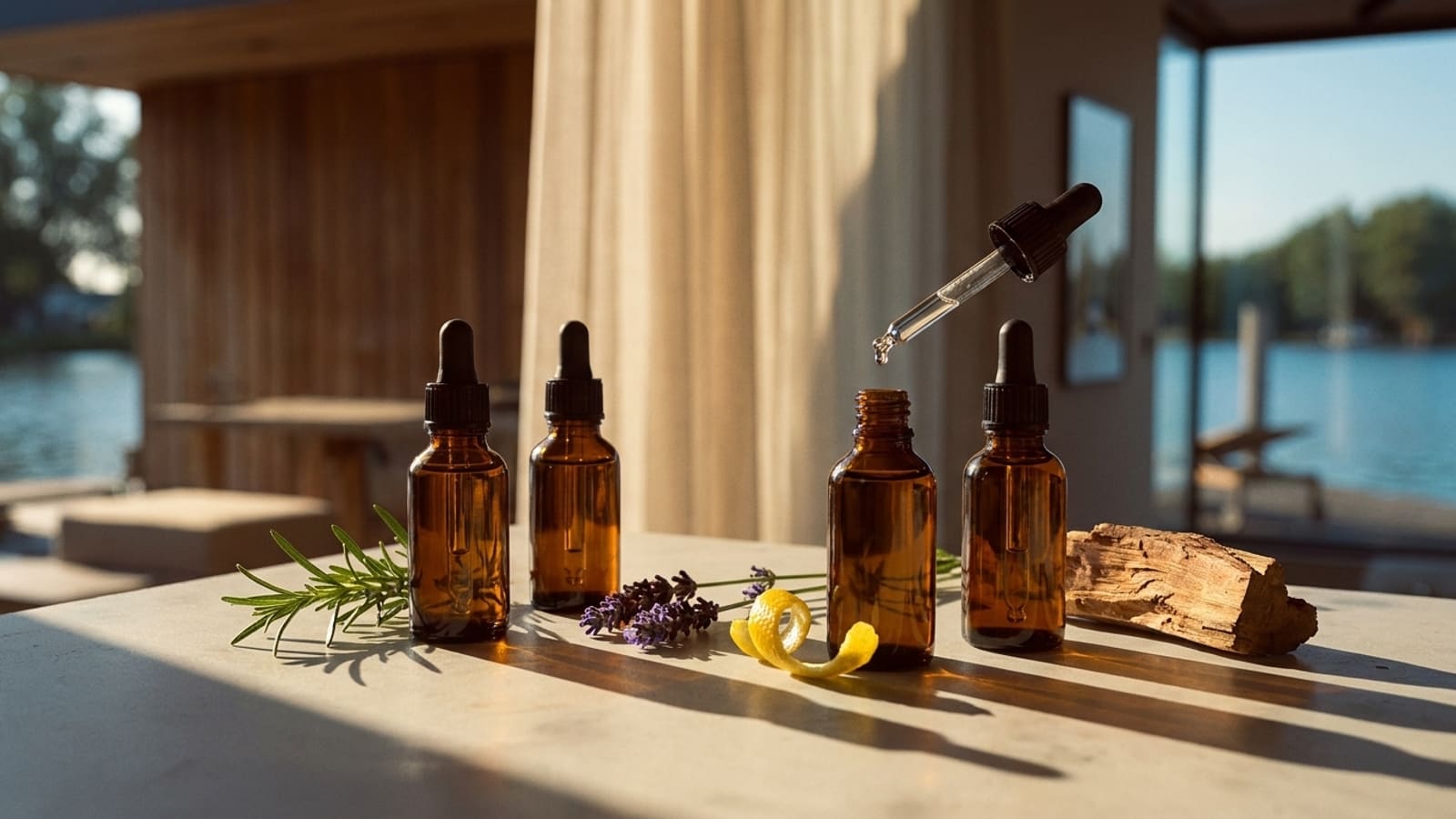
- Dark glass, amber or blue, with a dropper insert; clear glass lets light in, and plastic is a poor home for a concentrated oil.
Storing the bottle, and the cautions that matter
Daylight, warmth and open air age an essential oil, and citrus ages fastest. Keep it in its dark glass, cap screwed down after use, in a cool cupboard rather than on a windowsill or above the hob. An oil that smells flat, sharp or of solvent goes in the bin.
A few bottles and a cloth to try them on is enough to begin; our explainer on what a millilitre of oil costs in each kind of machine covers the money side.
Oils understood, machine still to choose?
Our guide pairs each scent with a moment, puts the cost per millilitre of each oil side by side, and says which device takes which bottle.